Fifty Years On, Wrestling Surprised Me Again
I’ve been watching professional wrestling for fifty years. Maybe longer but it’s a good ballpark. I’ve defended it during every single year because if I don’t, then who will…
This is important to establish before I start because I’m not somebody who has recently discovered that wrestling exists outside of WWE. I’ve watched wrestling change shape more times than I care to remember. I have seen it presented as sport, carnival, soap opera, cartoon, rock concert and something approaching performance art. I have watched dedicated TV shows and magazines come and go, Hulkamania arrive and die, ECW tear up the rulebook, WCW briefly conquer the world, the Monday Night Wars, the Attitude Era, the rise and export of NJPW wrestlers from Japan and the strange experiment that was Lucha Underground which handed us the best wrestling ever seen on the face of the planet.
When you put your mind to it, you can always find a way to watch things you’ve logistically been excluded from.
Bottom line: I’ve seen enough wrestling that very little surprises me any more.
For the last couple of years, because life is busy, I’ve followed WWE pretty loyally. Not exclusively, but enough that Raw and SmackDown have become my default idea of what weekly wrestling television looks like. Netflix made WWE ridiculously easy to follow in the UK, and I guess that was rather the point of its $5.2 billion deal. With at least two substantial shows a week, it works on a global scale and it’s been great…
Until this last week when I watched AEW Grand Slam Mexico (which for UK viewers at least, is amazingly free on ITVX - along with AEW’s own two shows a week programming. Hell, for a few quid, you can even kill the very few adverts pushed at you).
Somewhere during those few hours in Arena México I had an uncomfortable feeling - this is way better than a WWE Pay-Per-View.
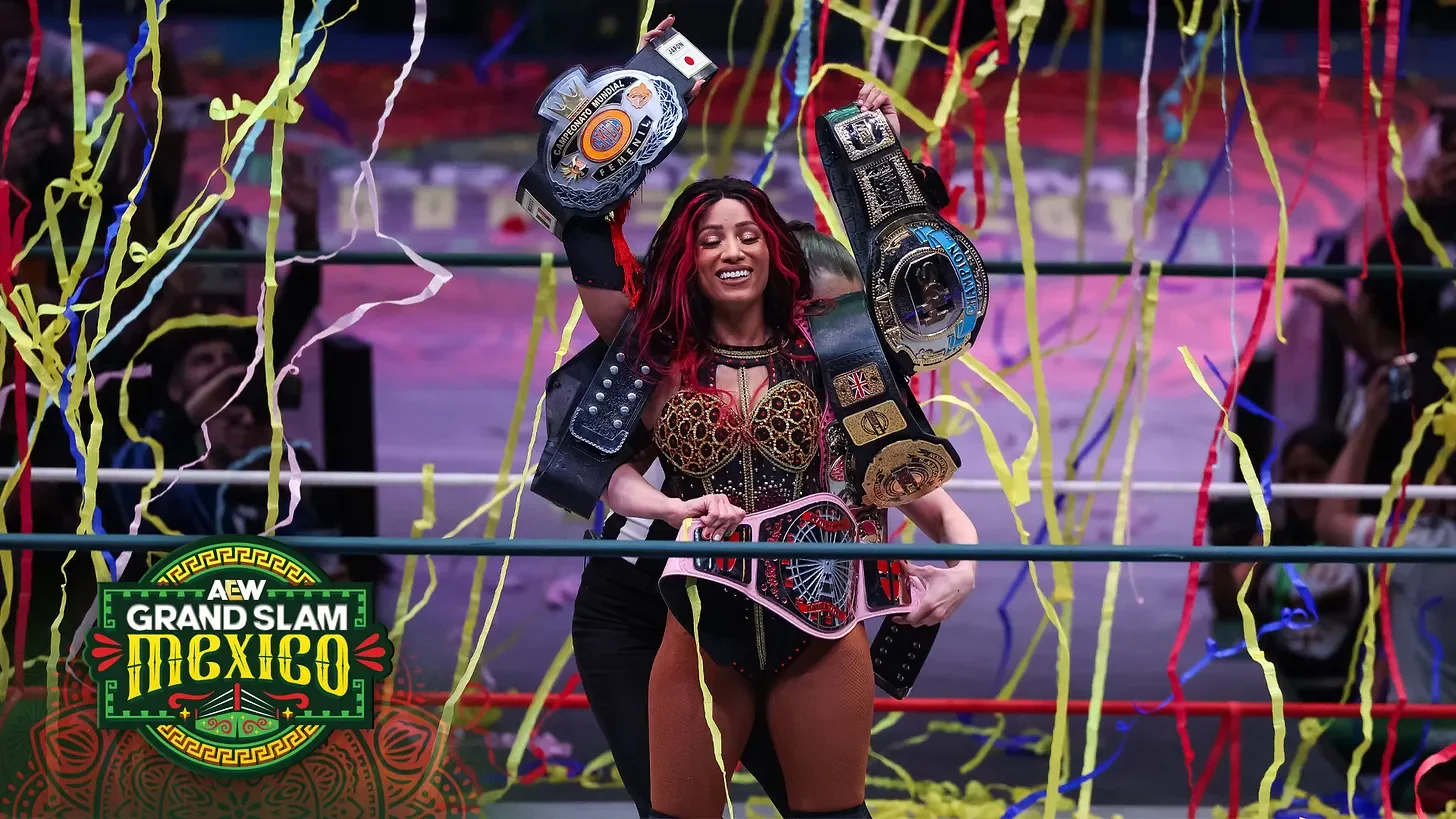
On all levels: better. Better wrestling, certainly, but, more surprisingly, I thought much of the storytelling was better too.
That second part is crucial because one of the accepted criticisms of AEW has always been that WWE tells stories while AEW puts on matches. WWE gives you characters, motivations and carefully constructed narratives while AEW occasionally appears to throw two excellent wrestlers into a ring and tell them to have the best match humanly possible.
There might be some truth in that criticism, but I’m not 100% there’s nearly as much truth in it now…
THE CATHEDRAL
Grand Slam Mexico took place in Arena México - whose full capacity is 16,000.
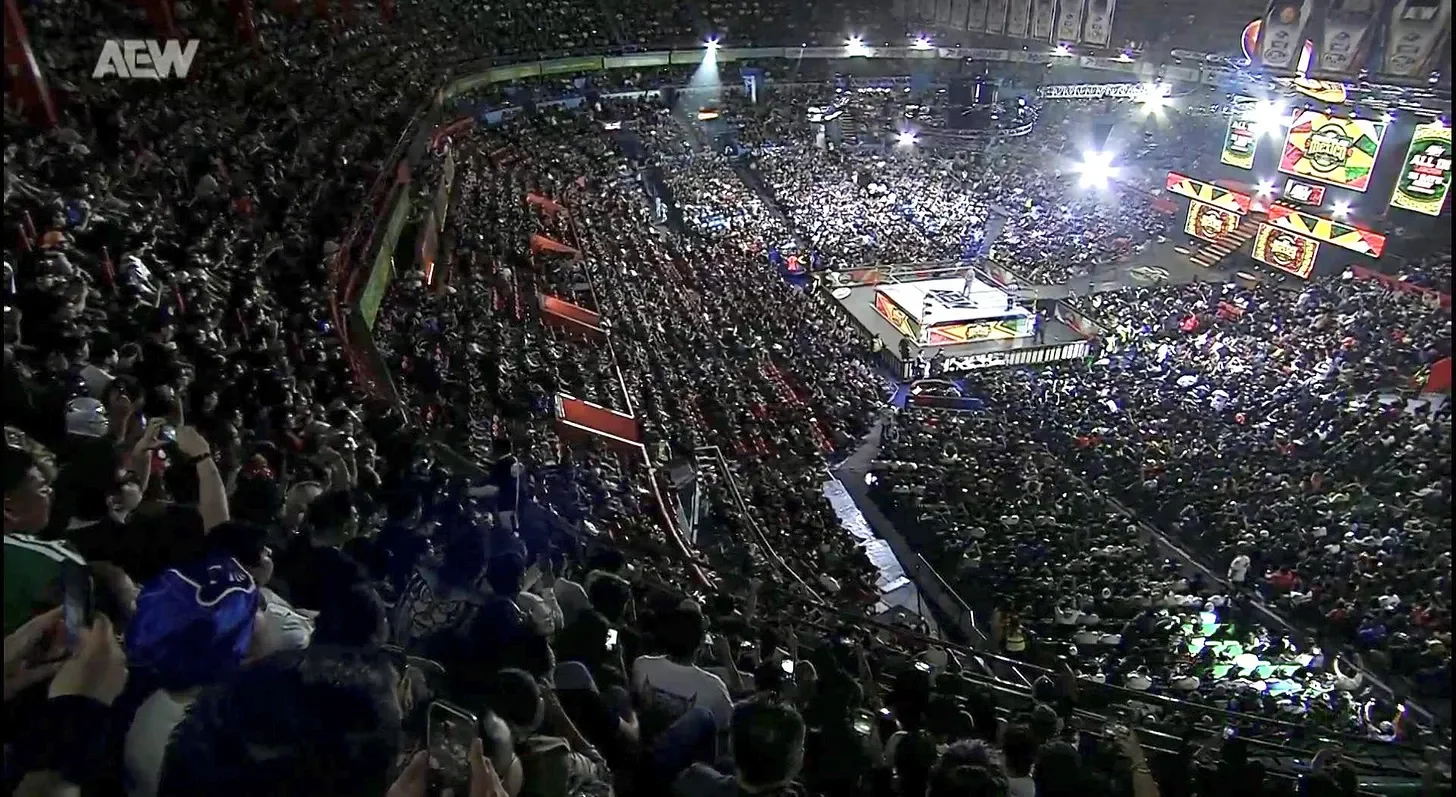
Arena México running at full tilt
There are wrestling venues and then there are wrestling buildings. Arena México is most definitely the latter.
The home of CMLL (Consejo Mundial de Lucha Libre, which translates roughly as World Wrestling Council) is known as the Cathedral of Lucha Libre and, watching Grand Slam Mexico, you will understand why. The place is absolutely rammed to the roof. Not television-full, with carefully positioned cameras and black curtains hiding empty sections, but properly, gloriously full and more importantly, it felt full.
Even the ring is different. The commentators pointed out that Arena México’s ring is considerably less forgiving than the one AEW’s wrestlers usually work in. This wasn’t simply AEW television with Mexico City written on the screen. They were wrestling on somebody else’s turf in almost every sense - if you’ve watched any Lucha at all, you’ll have figured out already that the mat has much less bounce to it. When you hit the floor… you really do hit the floor.
The steep banks of spectators rise around the ring until the wrestlers appear to be performing at the bottom of a human crater. The audience isn’t somewhere in the background. It surrounds everything and that changes wrestling.
A wrestling crowd is not the same thing as an audience at the theatre. It is part of the performance. It decides who matters. It can rescue something that isn’t working and occasionally destroy something that is. A great wrestling crowd can turn a good match into something memorable simply by believing in it.
On this night, the Arena México crowd believed in everything.
Perhaps that’s cultural. Lucha libre isn’t an exotic import being presented to a Mexican audience. It belongs there. The masks and rituals have meaning before anybody has even thrown a punch.
AEW was also smart enough not to arrive and attempt to Americanise the building. Grand Slam Mexico felt like AEW had entered somebody else’s world and was enjoying the privilege.
That’s an important distinction because it means this wasn’t WWE going overseas and presenting exactly the same programme with a different city written on the LED screens.
Arena México wasn’t scenery - it was also one of the performers.
AND THEN THE BELL RANG…
The card was ridiculous.
Copeland, Christian Cage and the Young Bucks against the Death Riders. Andrade against Tommaso Ciampa and Komander. Kris Statlander against CMLL Women’s World Champion Persephone. Willow Nightingale and the Brawling Birds against Mercedes Moné and Divine Dominion. Kyle Fletcher against Mike Bailey. Místico, Chris Jericho and Darby Allin against the Don Callis Family. Hangman Adam Page, Bandido and Brody King challenging The Demand for the Trios titles.
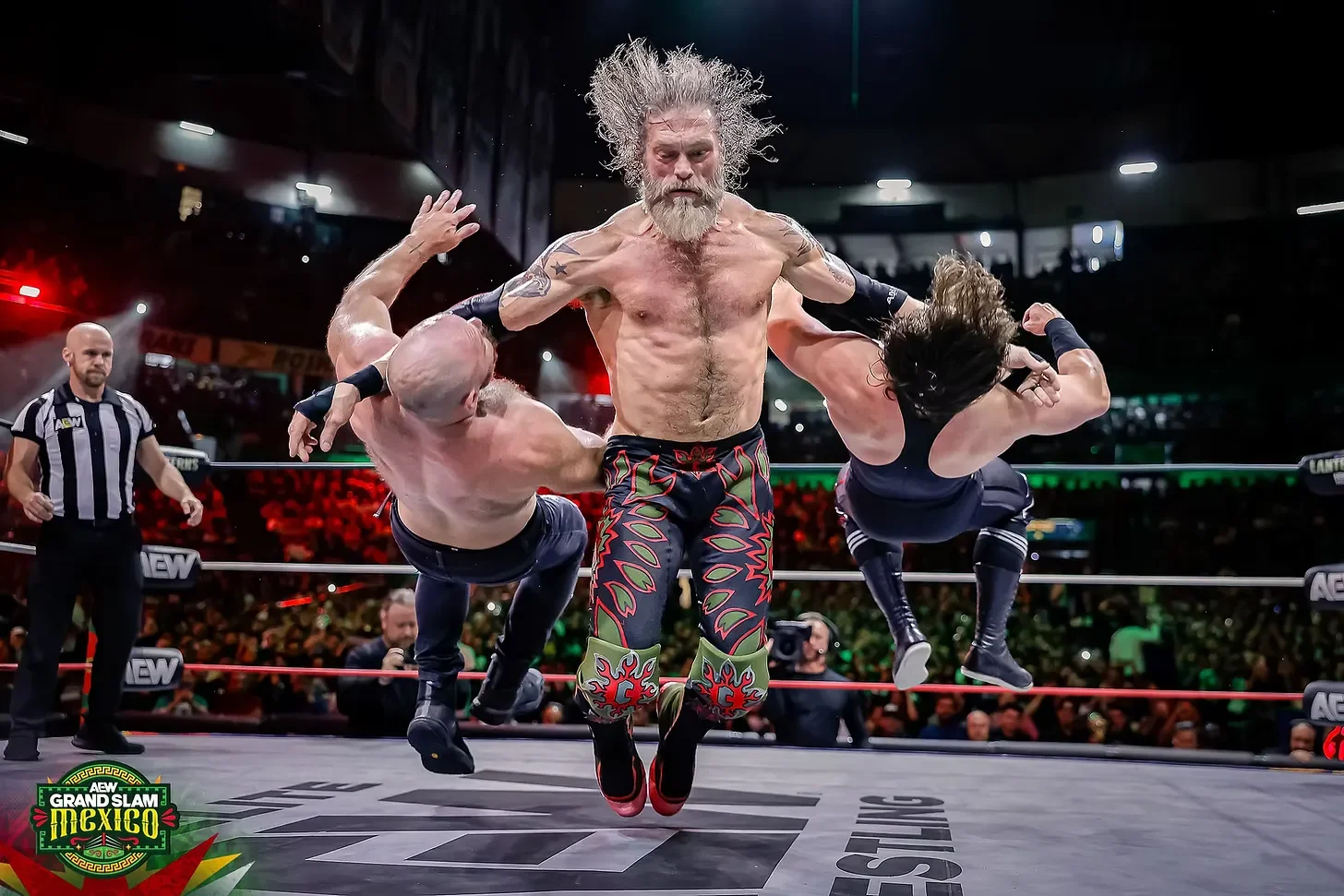
Adam Copeland… yeah, you probably remember him as Edge…
And finally Will Ospreay (one of two best wrestlers of all time - but we’ll come to that) and Mark Davis attempting to murder one another in a Mexico City Street Fight.
That’s an enormous amount of actual wrestling… and the variety was off the hook.
This is one of AEW’s great strengths and, depending on your point of view, occasionally one of its weaknesses. AEW doesn’t appear particularly interested in deciding what an AEW match is supposed to look like and that’s a good thing because professional wrestling shouldn’t have a house font. The downside is… well, it’s much like watching a proper rock n roll band. One night it’s on fire, but the next night can fall off a cliff. I’d forgotten how much I like that in an age when everything is streamlined to the nth degree of perfection.
On this show we had American television wrestling rubbing shoulders with lucha libre, Japanese influences, old-fashioned tag wrestling, spectacular aerial work, technical wrestling and outright violence. Nobody seemed to be working towards the same template with different costumes and the contrast between performers became part of the attraction.
That’s what wrestling has always been at its best.
FLETCHER AND BAILEY
If I wanted to show somebody what I mean by the difference between telling a story about a wrestling match and telling one through a wrestling match, Kyle Fletcher against “Speedball” Mike Bailey would be a good place to start.
There was already a story.
Bailey had beaten Fletcher clean during the Continental Classic. When they met again, Bailey believed Fletcher had needed the Don Callis Family to get past him. Bailey then won the right to challenge for the International Championship and specifically chose Grand Slam Mexico for the third encounter.
So the match didn’t begin at zero - there was history and then they wrestled - and bloody hell, they wrestled.
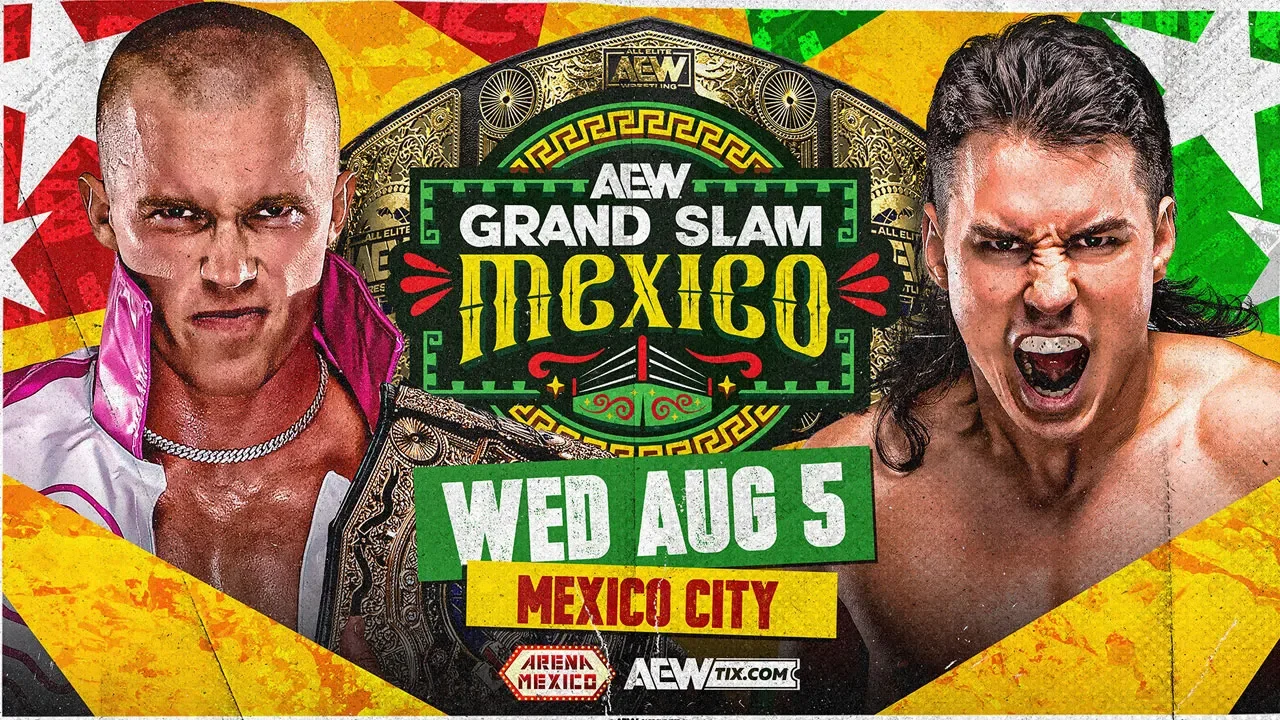
Fletcher and Bailey
This is where wrestling storytelling becomes difficult to explain to somebody who doesn’t watch wrestling. It isn’t necessarily about somebody standing backstage explaining their motivation into a microphone.
It’s accumulated information - for want of a better word, a soap opera I guess.
The story exists in bodies rather than dialogue.
Fletcher and Bailey are great at this because both are capable of top level wrestling without allowing the spectacle to become meaningless.
There’s always a danger with modern wrestling that athleticism becomes the whole point. If everybody can perform miracles, miracles become mundane but this was far from mundane. It was competitive and that’s the magic trick.
I know professional wrestling is ‘predetermined’ - it has to be to make television work. I’ve known that for rather a long time, but for the duration of a great match, that knowledge becomes irrelevant.
You never, ever sit there thinking about who has been booked to win.
You want to know who is going to win and that’s a whole different ballgame.
WRESTLING AS STORY
That feeling ran through Grand Slam Mexico and it made me reconsider WWE.
WWE talks constantly about storytelling like it’s been drilled into their skulls by a power-tool. Its wrestlers talk about storytelling. Its commentators talk about storytelling. Fans talk about long-term storytelling, but somewhere along the way we’ve allowed “storytelling” to become synonymous with people talking, when that’s the last thing it should be.
The wrestling match is the story and somewhere along the way, WWE has started acting like that app that tells you what the book is about rather than letting you read it for yourself. In fact, the entire peculiar genius of professional wrestling is that the story can be told physically.
A wrestler favouring an injured knee is storytelling. A champion discovering that his usual tricks aren’t working is storytelling. A wrestler going back to a move that failed ten minutes earlier is storytelling. Two opponents knowing each other so well that they begin countering counters is storytelling.
A crowd gradually changing its allegiance is storytelling.
You don’t need a microphone for any of this - you need wrestlers and Grand Slam Mexico was full of them.
Hangman Page returning to competition and immediately finding himself fighting for championship gold alongside Bandido and Brody King told a story before the match even started. The Demand had only just captured those Trios belts. Hangman had returned from the exile created by his Revolution defeat and the stipulation preventing him from challenging for the men’s world championship again.
Then he, Bandido and Brody King won.
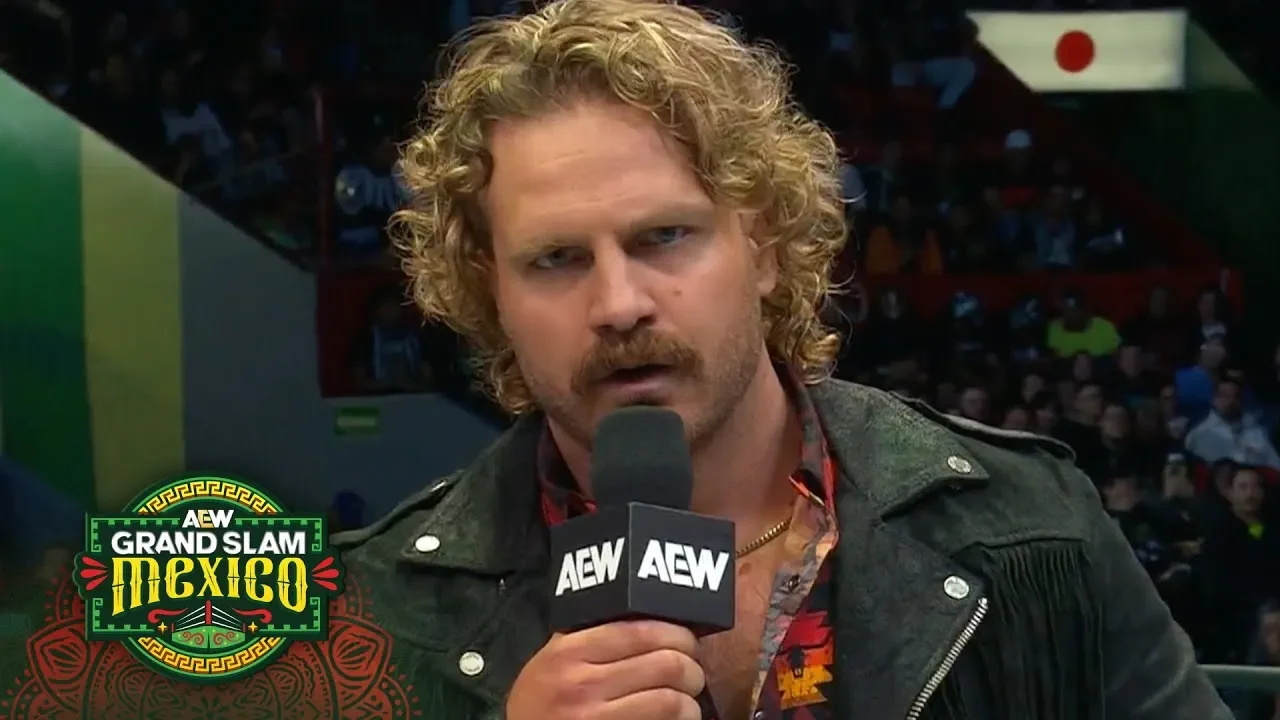
Hangman Page
Likewise Ospreay and Mark Davis. (I have nothing but great things to say about Ospreay. It’s not often a British wrestler gets the opportunity to climb the ladder to the top, but it’s becoming much less rare with him at the helm).
By the time they arrived at the Street Fight, violence wasn’t a substitute for a story. Violence was the consequence of the story.
Davis had previously already attacked Ospreay after his match with Daniel Garcia. Ospreay had only just walked away from the Death Riders after becoming increasingly uncomfortable with their methods. Davis then attacked him and taunted him about no longer having the Death Riders there to save him. Ospreay’s response was to demand a Mexico City Street Fight and prove there was “no hesitation left.”
So when chairs and assorted pieces of Mexico City began making an in ring appearance, it didn’t feel as though somebody had pressed the HARDCORE MATCH button.
They had arrived - and that’s storytelling.
THE WWE PROBLEM
Which brings me to WWE and I have to say upfront: WWE isn’t bad. I’d be a fool to claim it is because I love it and always have.
The company is in an extraordinary period of commercial success. Its production is astonishing. It has some superb wrestlers. It can make a performer feel like the most important human being on Earth simply by dimming the lights and playing their music (though nothing has quite eclipsed Stone Cold’s broken glass intro yet).
When WWE gets something right, nobody presents it better.
But watching Grand Slam Mexico made me realise how tired I’ve become of waiting for WWE television to get on with it. There’s adverts - both commercial and for their own programming - promos, recaps, backstage segments, the entrance, clips of what happened last week, somebody standing in the ring talking about what they’re going to do later. More adverts. Far too often I find myself wondering whether the wrestling is interrupting the wrestling programme and this is particularly damaging because WWE has some of the best professional wrestlers in the world.
They don’t need protecting from wrestling, so let them fucking wrestle.
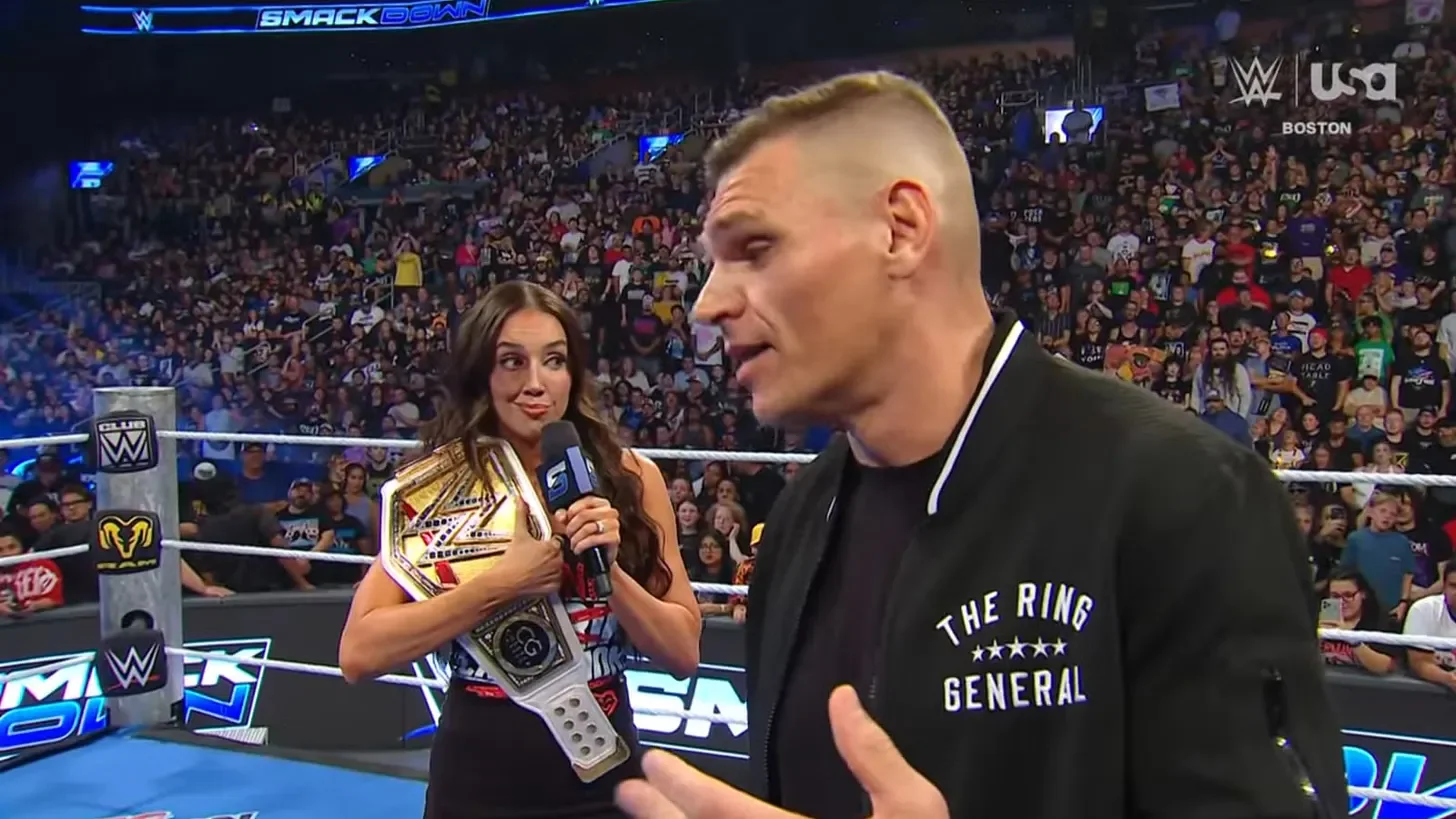
Chelsea Green and Gunther wittering on when there could be wrestling - if you have the means, go and find a video of Chelsea wrestling Penta in Mexico…
The modern WWE television product sometimes feels as though it doesn’t entirely trust its audience to remain interested unless something is constantly being explained, promoted or recapped. Having just sat through the FIFA World Cup with its hydration breaks and endless promotional garbage, it is perhaps, not exclusive to wrestling. Maybe it’s more of an American culture thing that US programmers thinks the audience can’t sit still for 10 minutes before they need to go and get a snack?
But don’t come to an international stage and expect the rest of the world to accept it without complaint.
Grand Slam Mexico trusted me - it said, here are some wrestlers: ring the bell.
THE PENTA PROBLEM
Which brings me, oddly enough, to Penta. He’s a useful illustration of what I think WWE sometimes gets wrong because Penta is ‘the other best wrestler’ in the world and WWE is making him boring.
And that should be almost impossible.
I’ve watched Penta for years and perhaps the best version of him appeared in the gloriously unhinged Lucha Underground series - all four seasons are currently available on Amazon.
Lucha Underground understood Penta and what it didn’t need to do with him.
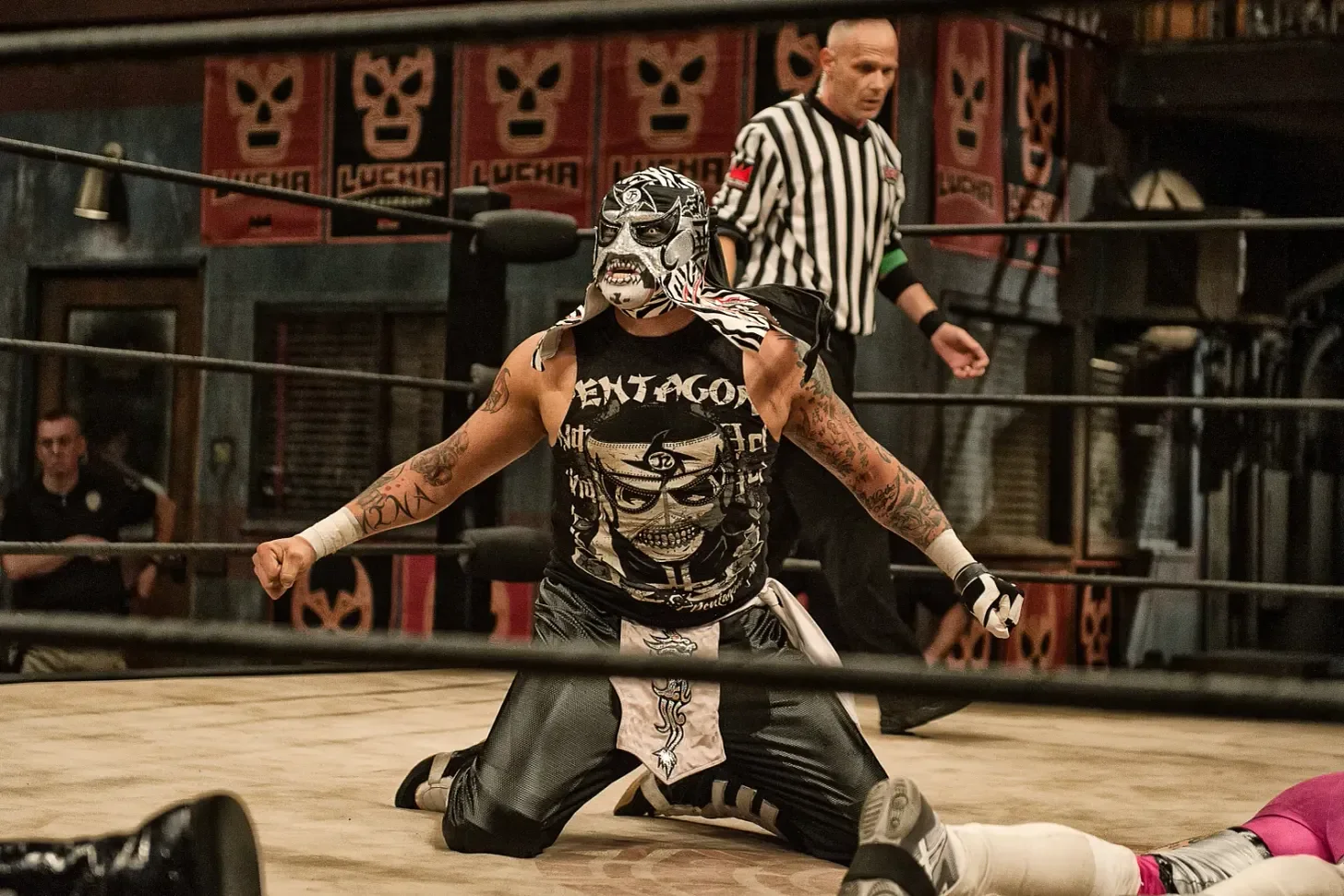
Pentagon Jr in Lucha Underground
Pentagón Jr. (as he was then) didn’t require endless explanation. He didn’t need to become an American television character with a previously defined series of moves who happened to be Mexican.
He was Penta!
He spoke Spanish. He broke arms. He looked dangerous and he felt dangerous because he was. There was mystery around him and Lucha Underground had enough confidence in the character not to explain the mystery away - although to be fair, they never did that with any of their wrestlers because Mexico has forgotten more about wrestling than the rest of the world will ever actually know.
His programme with Vampiro was mad, violent, theatrical wrestling at its finest and it worked because Lucha Underground presented Penta rather than processed him.
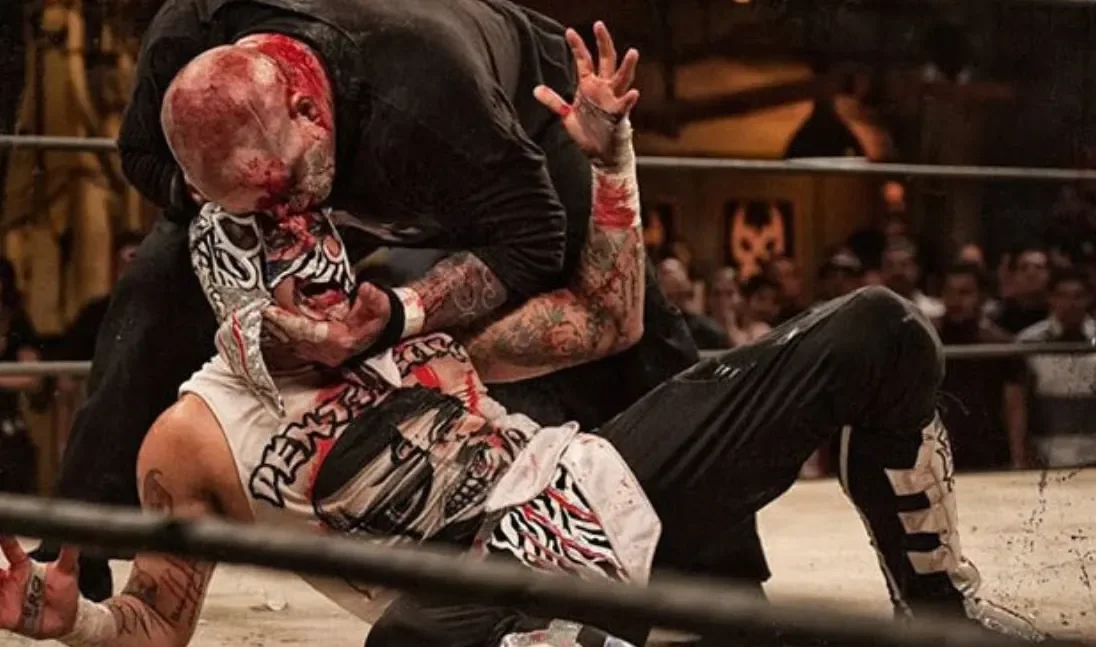
Pentagon Jr vs Vampiro - lucha at its finest.
WWE now has one of the most naturally charismatic wrestlers alive and yet increasingly seems determined to squeeze him through the same machinery as everybody else.
Why shouldn’t Penta speak Spanish? It’s a good question. Let him speak his own language. Subtitle it. Have somebody translate when necessary. Better still, occasionally don’t translate it at all - we’re wrestling fans and will get it.
Every attempt to make Penta conform to the rhythms of conventional WWE television removes a tiny piece of the thing that made him special in the first place and that makes me so sad. It was absolutely the right move for him because WWE is still the top of the commercial tree, but don’t handcuff him when he gets there!
Watching Arena México made that seem even more obvious. You don’t make wrestling universal by sanding off the differences. The differences are what make it universal.
THE BEAUTIFUL MESS
AEW is far from perfect.
Sometimes the freedom that produces something wonderful also produces chaos. Matches can contain too much. Everybody can kick out of everything. Spectacular moves can pile on top of spectacular moves until the audience becomes numb to them. Sometimes AEW badly needs somebody backstage to say no, but I’d rather watch a wrestling company occasionally fail because it attempted too much than one become so polished that all the rough edges disappear.
Grand Slam Mexico had rough edges and that’s good because wrestling needs them.
The entire form is ridiculous when examined too closely (but then again, what isn’t). Two people pretend to fight while secretly cooperating to tell us a story whose outcome has already been decided is something that shouldn’t work, but it’s had its way with me for my whole life.
I didn’t think about this once during Grand Slam Mexico.
FIFTY YEARS LATER
I didn’t walk away from Grand Slam Mexico thinking I was suddenly an AEW fan instead of a WWE fan. I’m too old for that nonsense and I don’t work like that.
Wrestling companies aren’t football teams. I don’t have to swear allegiance to one and hope the others are relegated. I want all of them to be brilliant because that’s the biggest win of all.
WWE being brilliant makes AEW better. AEW being brilliant should make WWE better… CMLL being brilliant gives both of them something else to learn from.
What I did finish Grand Slam Mexico thinking was that perhaps I’ve been accepting something from WWE television that I don’t particularly enjoy simply because I’ve become accustomed to it.
The dead time and constant interruptions are a royal grind. The sense that the match itself is sometimes merely one ingredient in a television product constructed from branding, advertising, promotion and content.
Grand Slam Mexico reversed that on the spot - the wrestling was the product and everything else existed to make me care about the wrestling… and when the wrestling began, it was allowed to tell me everything else I needed to know.
After all this time, that’s what I want. I don’t need professional wrestling to convince me it’s real or to reinvent itself and I sure as hell don’t need another authority figure explaining why two people are going to fight.
And I really don’t need somebody standing in the ring for twenty minutes telling me how important next month’s premium live event is going to be. I’ve been here before and so has everybody else.
I’ve seen it all thanks. I’ve watched wrestling become unfashionable, fashionable and unfashionable again. I’ve watched it be amazing and also watched it dredge the barrel for a rating. When it’s wonderful, it’s the best thing ever. When it’s at its worst, well… I guess that just makes the good stuff better.
After half a century, the greatest thing wrestling can do for me isn’t make me believe that it’s real - it’s to make me forget how long I’ve been watching, and for a few hours in Arena México, with thousands of people seemingly hanging over the ring and some insanely talented professional wrestlers throwing everything they had at one another, I wasn’t analysing television formats or thinking about advertising breaks or wondering how somebody was being booked.
I was actually watching wrestling.
AEW were on fire that night - it was leagues ahead of every major event WWE has broadcast this year and that’s about the highest praise I can give it.
Sion Smith | August 2026
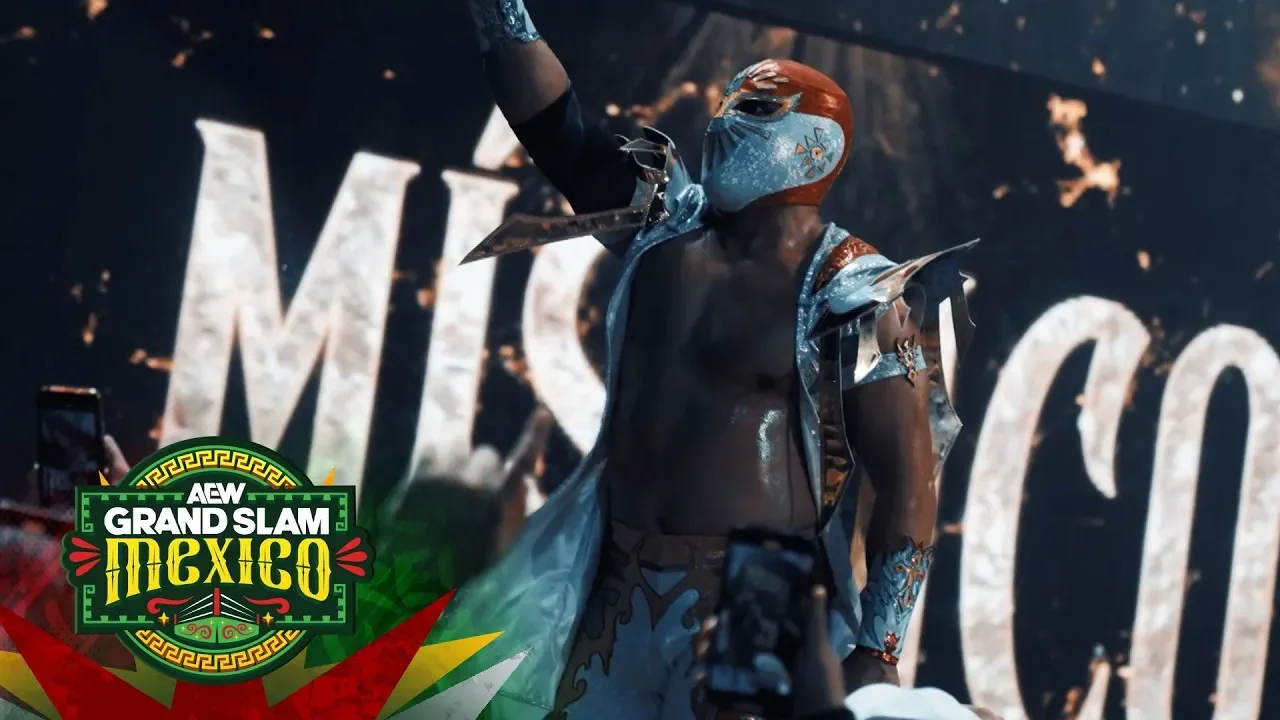
Mistico… under-rated and under-used. They will figure it out eventually.