AEW and the Rule Book
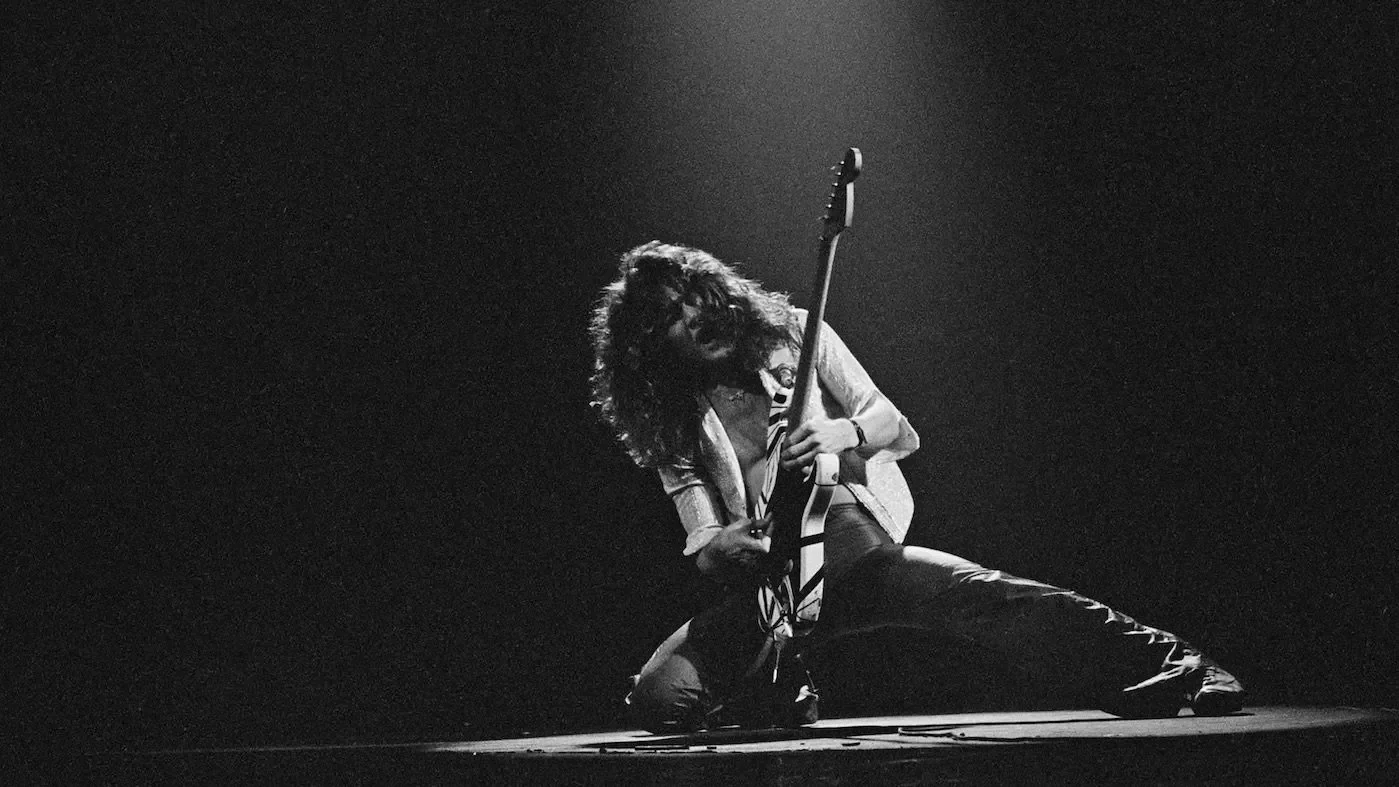
In 1978, Black Sabbath made what must have seemed like a perfectly sensible decision. They took Van Halen on tour.
Sabbath were Black Sabbath. They had already effectively invented a sizeable proportion of heavy metal and were established enough that nobody needed convincing they belonged at the top of the bill.
Van Halen had made one album and were the support band. The problem was that nobody had explained this to Van Halen.
Every night they came out like four men escaping a burning building. Eddie Van Halen was doing things with a guitar that appeared to involve technology not yet available to the general public, and David Lee Roth behaved as though trousers were an unnecessary concession to civilisation. They jumped, kicked, screamed and played as if management had told them they had 45 minutes to become the biggest band in the world or they would be working in Starbucks by Thursday.
Tony Iommi later remembered the problem: “We didn’t know where we were going — and Van Halen were really going somewhere. They were jumping all over the stage, and we were like old farts in comparison.”
Van Halen weren’t doing anything wrong. It wasn’t a competition, but it’s a story as old as the hills.
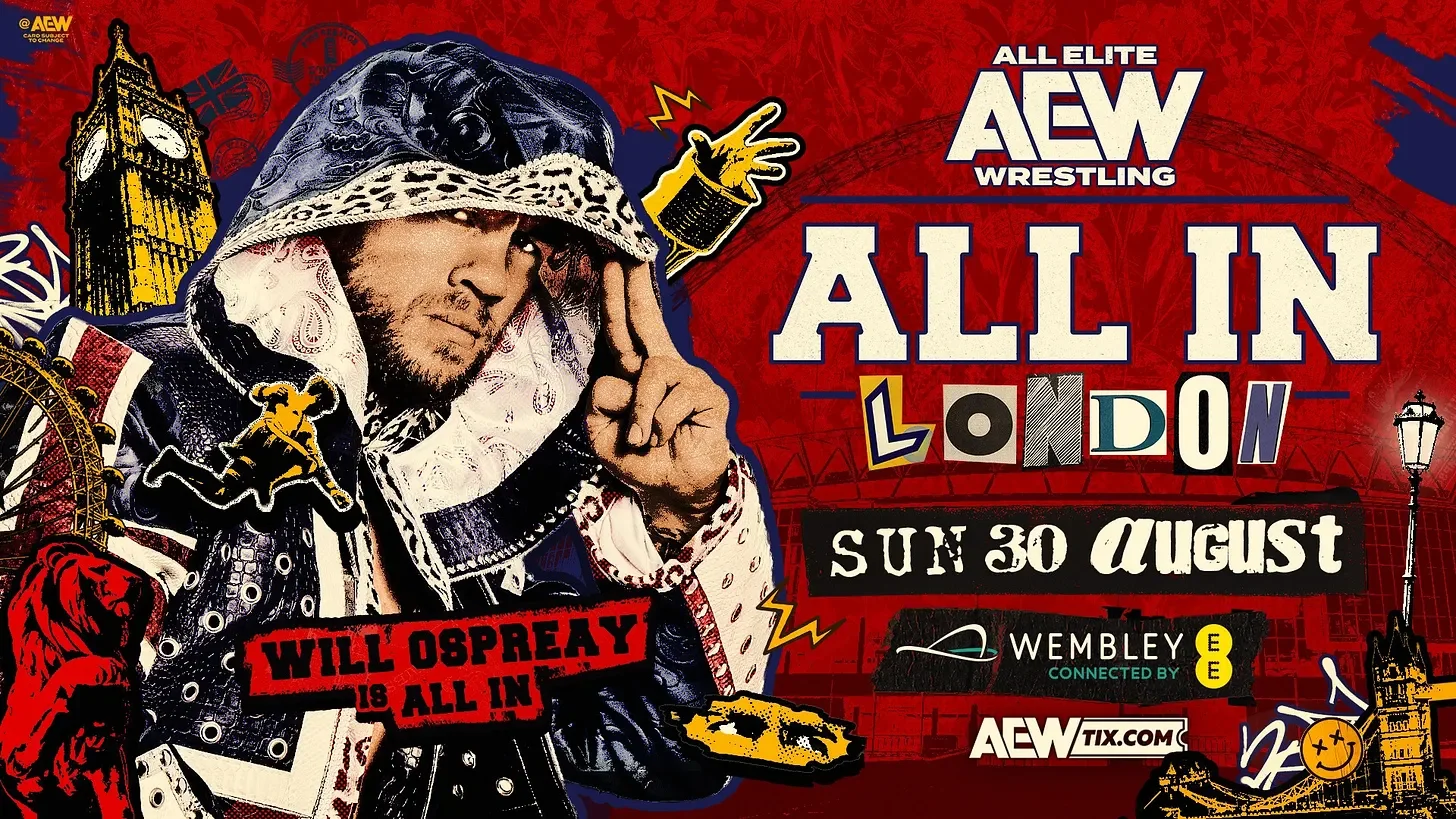
Watching AEW All In London this week, my head came up with this analogy because WWE have turned into Black Sabbath and AEW, increasingly, is Van Halen.
This isn’t an argument about which company makes more money. It isn’t an argument about which company is more famous, nor a fistfight about which company has the bigger stars. The answer to all those questions is WWE. It’s not even about the talent pool.
See, professional wrestling has the wonderful property of making all of that irrelevant the moment somebody rings a bell, and at All In London, AEW came out like the support band with something to prove — again, which is the important word.
Because having recently watched AEW Grand Slam Mexico, I came away thinking I’d seen wrestling better than anything WWE had produced at its major events this year. I wrote about it right here and wondered whether I’d simply caught AEW on one of those nights when everything happened to work, because that happens too.
But All In answered that question.
No.
SOME THOUGHT APPEARS TO HAVE GONE INTO THIS
This shouldn’t be noteworthy. It really shouldn’t, but one of the things that stuck out during All In was that somebody appeared to have sat down beforehand and thought: what would make this particular wrestling match interesting?
Not what does an AEW match look like, how many finishers do we need — and certainly not where does the commercial break go?
But what can these people in the ring do together that somebody else couldn’t?
That’s a very different question. And you could see the answer changing throughout the card. There was variety again — different styles, different speeds, different kinds of storytelling. People weren’t simply performing variations on the same match while wearing different trousers.
Professional wrestling shouldn’t have a house font. I said that after Grand Slam Mexico and I’m increasingly convinced it’s one of the reasons AEW’s big events are working for me. If there’s a downside, it’s that AEW is rather like a rock n roll band that refuses to use backing tapes to keep everything in line. One night it can be on fire and the next it can fall off a cliff.
Frankly, that’s exactly how I like my rock n roll — nobody handed Van Halen a click track either.
Whether you know it or not, we’ve become accustomed to entertainment being streamlined to the nth degree of perfection. Everything is tested, branded, packaged and delivered according to a format that somebody somewhere has established works for the most number of people and the accountants.
WWE may be the ultimate expression of that in professional wrestling, because nothing looks better, nothing is slicker — almost nothing is allowed to go genuinely wrong, and yet in doing so, things seem to go wrong a lot in WWE. Conversely, AEW still occasionally looks as though it might drive the car through the wall. Let’s dig around a little in what made All In worth a damn.
HOW ARE COPELAND AND CHRISTIAN STILL DOING THIS?
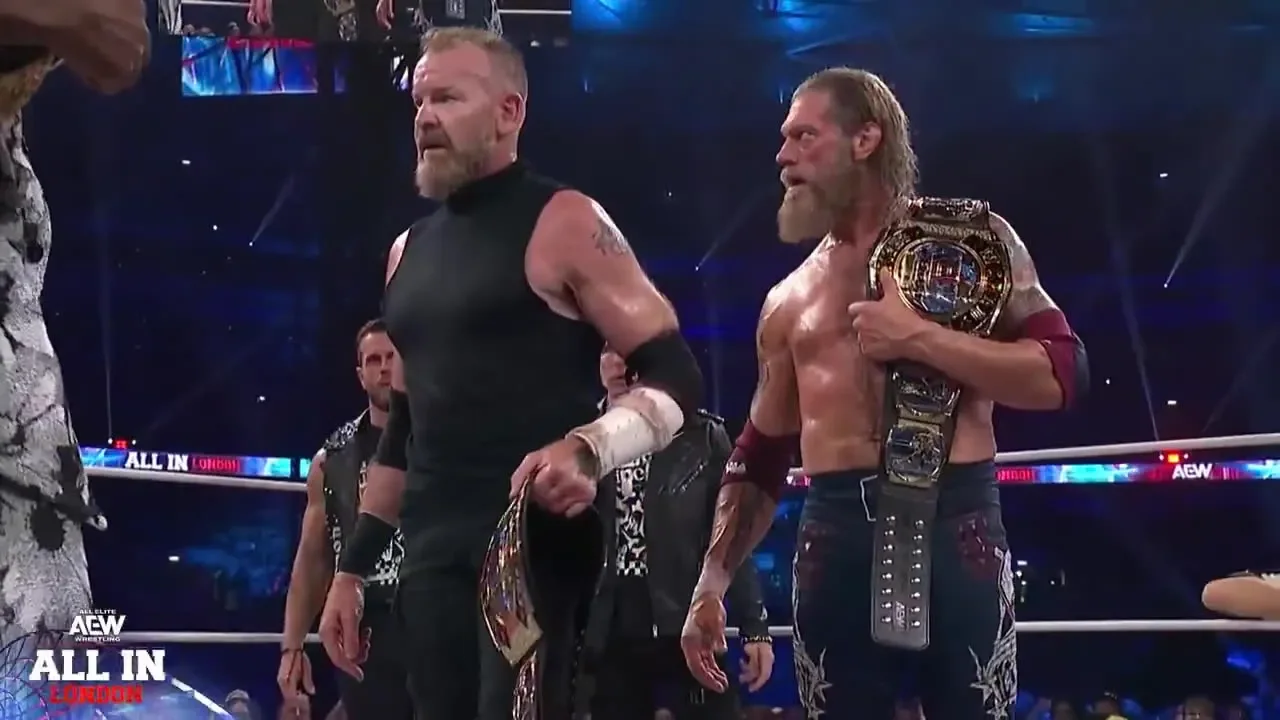
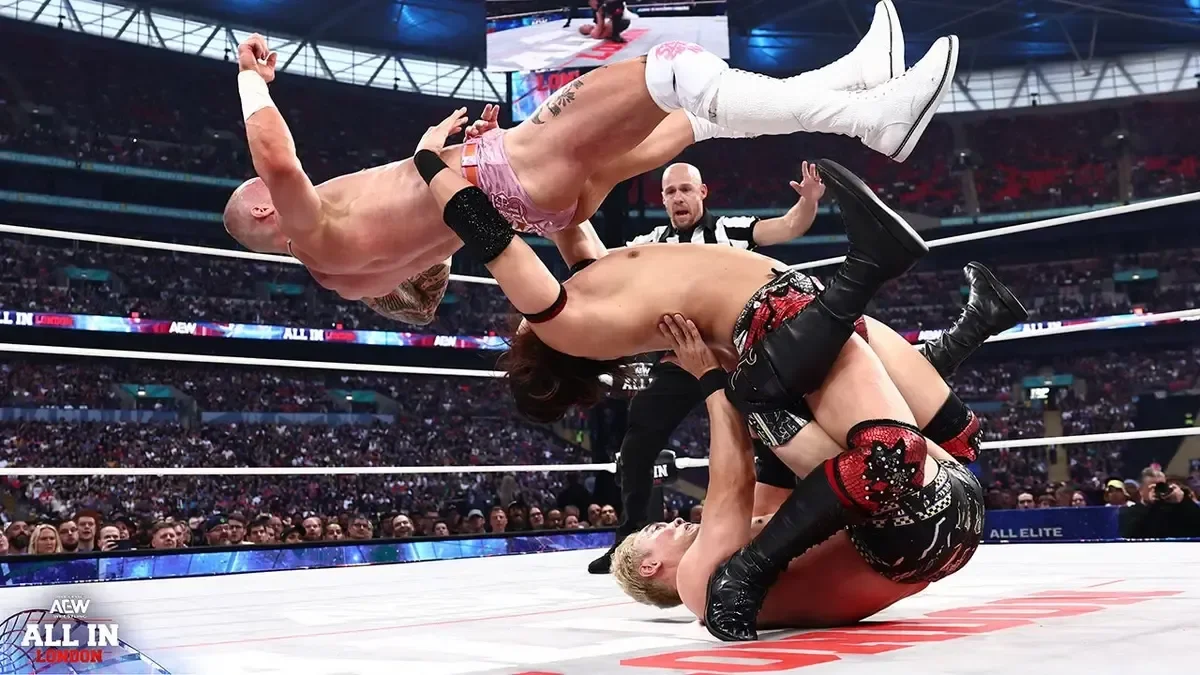
Adam Copeland and Christian Cage against the Young Bucks shouldn’t work. Copeland is 52. Christian is 51. That’s not an insult, it’s the interesting part.
Between them they have been wrestling professionally for something approaching sixty years. The Young Bucks have spent their careers helping accelerate professional wrestling into the frantic, hyper-athletic form we now recognise. So you can’t pretend they’re the same.
Put the generations in the ring and let the difference become the match — that’s what happens. The Bucks are quicker but Copeland and Christian know things. That is wrestling. Not everybody needs to be capable of doing the same things. In fact, wrestling becomes considerably less interesting when they are.
Christian Cage may be one of the greatest examples currently working of a wrestler who understands that knowing when to do something is more valuable than knowing how to do everything.
Somehow, in 2026, Copeland and Christian aren’t appearing at Wembley as two legends wheeled out to receive applause for things they did twenty-five years ago — they’re relevant as relevant can be.
Wrestling has historically been terrible at this. Eventually the legend comes back, does the entrance, hits the familiar moves and everybody applauds because they remember when it mattered. I watched Serena Williams at Wimbledon and it left a bad taste. This was not that.
Copeland and Christian mattered today. The past was useful because it gave the match history, but nostalgia wasn’t required to make the wrestling work. That’s another thing AEW seems increasingly good at when it’s on form: understanding that a wrestler’s history is something to use rather than something to recreate.
THREE DIFFERENT ROADS THROUGH JAPAN
Then there was Kazuchika Okada, Konosuke Takeshita and Kyle Fletcher — the match that, for my money, was the first of the night’s three main events, even though nobody billed it that way.
On paper, you could simply describe this as three of the best wrestlers in the world being given fourteen minutes at Wembley and leave it there, but that misses almost everything that made it interesting. All three have been shaped by Japanese wrestling, but in completely different ways.
Kazuchika Okada is practically modern New Japan history. He was the face of NJPW, multiple-time IWGP champion and one of the wrestlers responsible for introducing a generation of Western fans to just how extraordinary contemporary Japanese wrestling could be.
Konosuke Takeshita isn’t a New Japan creation at all. He came through DDT — another Japanese wrestling tradition entirely — before joining AEW and subsequently marching into NJPW, competing in the G1 and winning the World Television Championship.
Kyle Fletcher is Australian, but Japan was one of the places he learned his trade before becoming an AEW contender. It all counts.
So what happens when you put those three different wrestling educations into the same ring? Apparently, they start stealing each other’s homework.
Takeshita hits Okada with his own Rainmaker. Fletcher steals Takeshita’s Raging Fire. Everybody knows everybody else’s answers, and crucially, the moves aren’t simply there because they look spectacular — they’re saying something about the people using them.
Better still, there’s an actual story underneath all of it.
Fletcher and Okada are supposed to be on the same side. Don Callis doesn’t particularly care which of them leaves with the International Championship because either way the belt remains in his family. This lasts approximately as long as you’d expect when one of the men involved is Kazuchika Okada. Fletcher does the damage to Takeshita and leaves him on the floor. Okada could take advantage of that and pin Takeshita — the Don Callis Family wins. Everybody goes home reasonably happy.
Except Okada hits Fletcher with the Rainmaker and pins the champion instead. Just to make sure everybody understands exactly what has happened, Fletcher has to hand Okada the belt and raise his arm.
Nobody needed to spend twenty minutes in the ring beforehand explaining their motivation. Nobody needed to point at a giant photograph of the championship. The characters made decisions while wrestling and those decisions told us who they were. Somebody really had thought about this match.
I’ve spent years watching American wrestling companies acquire extraordinary Japanese wrestlers and then have no idea what to do with them.
WWE is particularly frustrating in this regard because it has repeatedly proved that it knows exactly how good these people are. Asuka has been a world champion. IYO SKY has been a world champion. Shinsuke Nakamura won the Royal Rumble. Kairi Sane won the Mae Young Classic and became NXT Women’s Champion. Giulia arrived with enough reputation that WWE immediately presented her as somebody who mattered.
So what’s the problem?
I think it’s that WWE still has a tendency to regard success in WWE as the final stage of the wrestler’s development. You arrive from Japan and eventually you become a WWE Superstar. But AEW seems more willing to ask a different question: what was so fucking good about you in the first place?
That’s why watching Okada and Takeshita at Wembley feels important. AEW didn’t need Kazuchika Okada to become an American wrestler. It needed Kazuchika Okada. It didn’t need Konosuke Takeshita to become one either, and neither man looked remotely out of place in a match that could easily have headlined the entire event.
That’s the crime when talent like this gets buried halfway down somebody else’s card. Championships are props — I’m talking about position. Okada can easily headline a pay-per-view and so can Takeshita. IYO SKY, Asuka, Kairi Sane can headline a pay-per-view. Nakamura could have headlined pay-per-views for years. In fact, Nakamura won the bloody Royal Rumble in 2018 by eliminating Roman Reigns and went on to challenge AJ Styles for the WWE Championship at WrestleMania, so WWE knew this as well — and then, somehow, forgot.
We’ve somehow reached an era in which some of the most accomplished professional wrestlers on Earth can be treated as though they’re missing an ingredient because they don’t fit neatly into the established American television template. But maybe the template is missing the ingredient.
Because when Okada, Takeshita and Fletcher walked into Wembley, AEW didn’t spend twenty minutes explaining Japanese style wrestling to me. It just put three brilliant professional wrestlers in a ring and assumed we’d keep up.
Which we did.
This isn’t 1985. Wrestling fans aren’t restricted to whatever happens to be broadcast in their local television market. We’ve watched NJPW, Stardom, CMLL and AAA. We’ve watched wrestling from Britain, Japan, Mexico, America and everywhere else we can find it, because that’s what we do. If something isn’t officially available, wrestling fans have historically demonstrated a remarkable ability to find it anyway, and the audience has become internationally literate. So stop worrying that we won’t understand, and trust us.
A LITTLE BIT OF BLOOD
And while we’re trusting wrestling fans, can we talk about blood, because professional wrestling has developed a slightly peculiar relationship with it.
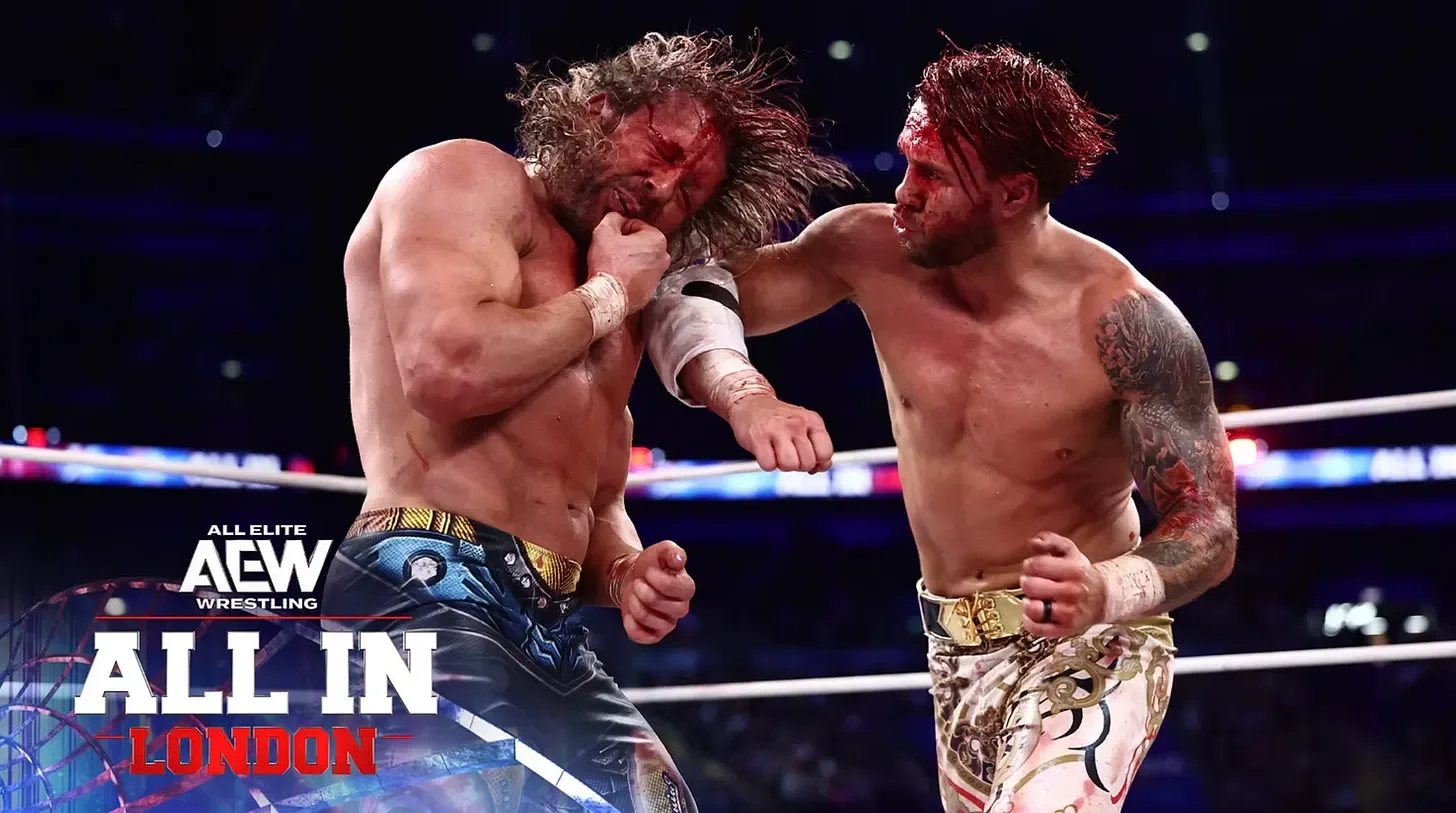
There have been eras when everybody bled constantly and it stopped meaning anything. There have been other eras when companies became so terrified of blood that somebody could be thrown through a plate-glass window and emerge looking as though they’d just returned from Waitrose. Neither works, but All In got it about right. Blood should mean something. It should tell you that something has changed.
There is a reason certain photographs become permanently embedded in wrestling history. Steve Austin at WrestleMania 13 is the obvious example. His face covered in blood while trapped in Bret Hart’s Sharpshooter is probably more famous than almost anything else that happened in the match. The photograph made him look immortal, and that’s what blood can do in wrestling when you don’t squander it.
Darby Allin understands this perhaps better than almost anybody currently wrestling, because everything about Darby already looks as though it might end badly. Add blood and suddenly the still photographs don’t look like publicity pictures but more like evidence, and that’s historically valuable because wrestling exists after the event in photographs more than we sometimes realise. A wrestler bleeding at exactly the right moment can look like a legend before the match has even finished.
Use it rarely, use it properly, and let the photographer do the rest.
TWO MORE MAIN EVENTS
Then All In did something else I loved — it finished twice, on top of the Okada match earlier in the card. Willow Nightingale and Mercedes Moné, then Kenny Omega and Will Ospreay. Those aren’t a semi-main event followed by the match we’re all actually waiting for. Between the three of them, this was a card with three main events in it.
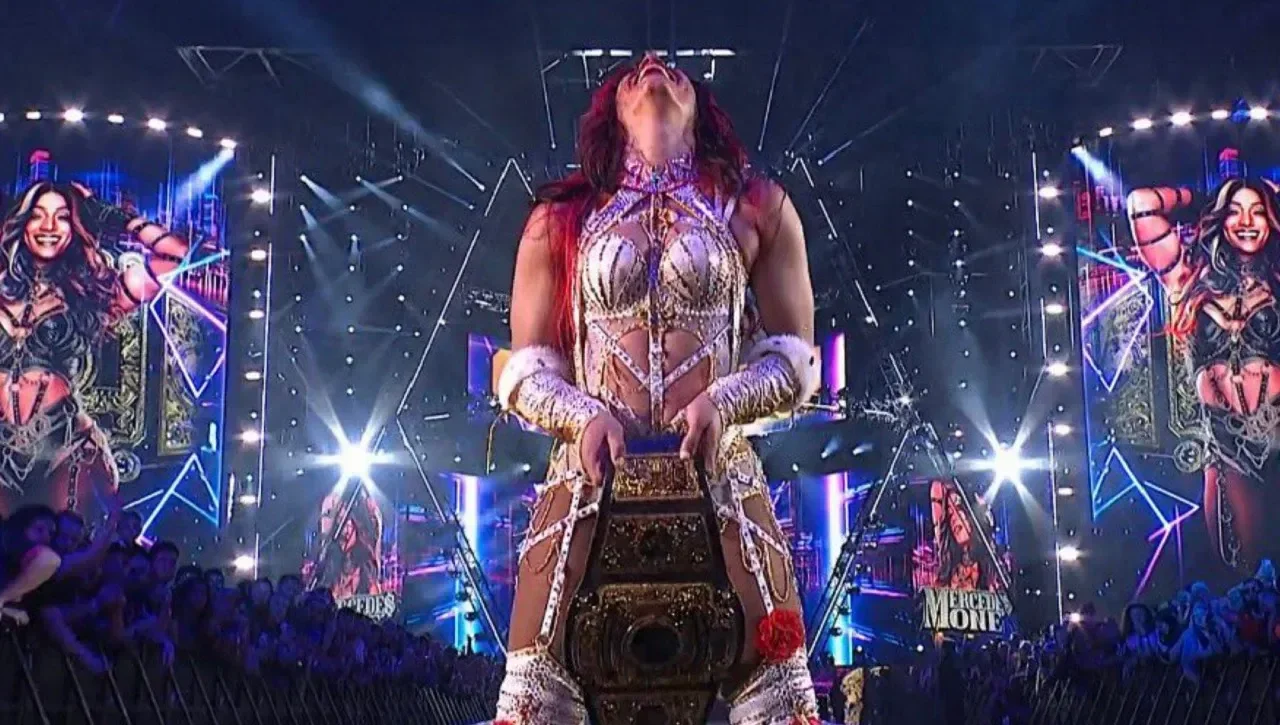
Mercedes Moné is already a star. Willow has become one — what a contender for match of the year. They could have finished the show with that and nobody would have gone home disappointed. But no, the game is raised to follow that with Kenny Omega and Will Ospreay.
There’s a danger when you construct a card like this that the audience simply runs out of energy. They’ve seen too much, cheered too much and already had their climax. Now you want them to do it again.
That’s where Ospreay and Omega come in. There isn’t much I can say about Will Ospreay that watching him wrestle won’t explain considerably better. He may be the best professional wrestler in the world and is certainly one of the best I’ve ever seen, and after fifty years of tuning in, that’s not something I say because somebody did an impressive flip. Ospreay understands spectacle, certainly, but he also understands why the spectacle matters.
Then again, Kenny Omega is Kenny Omega and the other best professional wrestler in the world.
So you’ve got an audience at Wembley that has already watched a huge wrestling event and already been given something that could legitimately have closed the show. Now go out there and make them care again. That’s the job.
THE SUPPORT BAND PROBLEM
And this is where I come back to Van Halen.
WWE isn’t bad. Far from it. I’ve watched WWE for most of my life and I want WWE to be magnificent because it has extraordinary wrestlers and unbelievable resources. It also has global reach AEW can currently only dream about. Its production can make somebody walking towards a wrestling ring feel like the second coming, but perhaps that’s also the danger.
WWE knows the rules of engagement because they built the damn things. It knows how long the entrance lasts. It knows where the camera goes. It knows when the promo happens. It knows where the story beat belongs. It knows how you make a WWE Superstar. It knows what WrestleMania looks like — it knows what success looks like because it has spent decades defining it.
AEW sometimes doesn’t appear to know any of those things, and sometimes that’s a disaster. But occasionally it means somebody says: what if we put these three together? What if we let Okada be Okada? What if we give the women enough time to make this feel like a main event? What if we put another main event immediately afterwards? What if the fifty-something legends wrestle the Young Bucks and we don’t pretend they’re young? What if we just let them wrestle?
That’s Van Halen opening for Black Sabbath. The headliner knows how to headline. The support band only knows that this might be its chance. Hunger is very difficult to manufacture.
IT WASN’T A FLUKE
So: AEW: Grand Slam Mexico surprised me and AEW: All In London convinced me.
AEW’s major events are currently giving me something WWE increasingly struggles to provide. The feeling that I genuinely don’t know what the next match is going to feel like. Not who is going to win, but what is this going to be. That’s exciting, because pro wrestling is supposed to be exciting. It seems almost insulting to have to write that down.
I don’t need everything to be perfect and I don’t particularly want everything to be perfect. I want somebody occasionally to try something that might not work, and I want wrestlers from different traditions to collide hard. I want a fifty-two-year-old wrestler to use the fact that he’s fifty-two rather than pretending he isn’t. I want a Japanese wrestler to be Japanese and a Mexican wrestler to speak Spanish. I want women to headline and I want blood when blood makes the match better. I want somebody backstage to look at three wrestlers who don’t appear to fit together and think: fuck it, let’s see.
The irony is that none of this is particularly revolutionary. It’s professional wrestling. And perhaps that’s what WWE could learn from AEW right now — not how to be AEW. God forbid. WWE should be WWE, but perhaps it could occasionally stop being quite so good at being WWE long enough to remember that the enormous machine exists to facilitate something beautifully simple.
••••
Two more shows this week put that theory back to the test: Triplemanía XXXIV that I will watch after posting this, and WWE’s Penta-vs-Roman-Reigns title match in Mexico City tomorrow. If somebody hands Penta the belt, I’ll believe WWE’s actually been paying attention to my rules of engagement:
Here are some wrestlers.
Ring the fucking bell.
Footnote: It took me ages to find All In - it’s on ITVX (free) but you have to search for ‘wrestling’ as opposed to ‘AEW’ - which is the dumbest thing in the world. If anybody is reading at ITV… please fix it.