Cagney and Lacey and The Big Lie
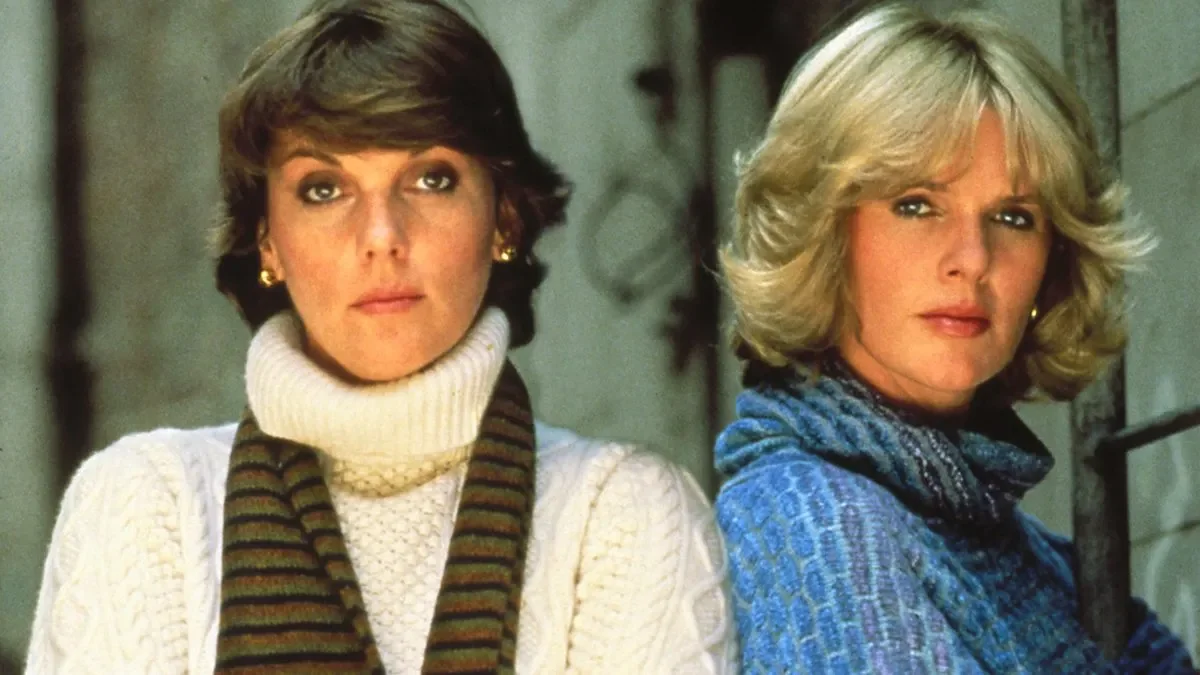
Yesterday, I discovered they were screening Cagney and Lacey on Amazon. Did you know that Sharon Gless was not the original Cagney?
She wasn’t even the second Cagney!
Me neither - she didn’t turn up until season two. I am rocked to my core by this revelation.
It’s hard to square this with myself because some things in life, you think are set in stone.
Maybe that’s a bit of overkill. Cagney and Lacey is hardly the bedrock of my entire being, but still...
As I move myself through my existence here, I find myself to be an increasingly unreliable narrator and this needs some TV cop level of investigation (which means, I’ll kick it about for 50 minutes, eat some carbs and bring it to a close with a satisfying still shot that fades to grey for an epilogue).
The term ‘unreliable narrator’ is a phrase I’ve only learned in the last couple of years. Being revealed as the unreliable narrator in my own life is quite satisfying, so let’s take a look at the definition of such a thing - which stems from the publishing world. It is:
“A storyteller you can’t fully trust. Their version of events is slightly skewed, incomplete or flat-out deceptive, intentionally or not.”
So in other words, your credibility is compromised - which further causes the reader to question the truth. In publishing it’s usually driven by either deliberate lying, having limited knowledge or simply having a contradictory account, sometimes even from your own earlier version. But it’s a tool. To find out you’ve been falsely holding someone’s hand all the way to the bottom of the garden path is a beautiful thing.
The past is not a building of concrete and steel. The past is a castle made of clouds on ever shifting sands for all of us. The details shift. Sometimes because you want them to and sometimes because you smoothed off the rough edges and sometimes, that little bit of spice gives you the opportunity to make the story better - either for yourself or your perceived audience.
As has been well established by better writers than me, we are nothing but stories. Why wouldn’t we tweak our own to suit the narrative we’re looking for?
The Catcher in the Rye is easily one of the best books ever written and has the most unreliable narrator of all time in the shape of Holden. Fight Club is another great example, as is Henry James’ Turn of the Screw. When you have no idea what’s really going on, it makes the journey all the more satisfying.
It’s well known out in the world that we tell ourselves stories to ground ourselves and build an identity - even if the story you’ve come up with is harrowing - because nobody gets to float through their lifespan like a dandelion seed. If you tell yourself you’re a three time loser, you’ll pretty much end up being one because stories (real or fictional) have a secret weapon they forgot to tell you at birth.
They have momentum.
If I looked, I might find that popular psychology will tell you to simply change the story for a better result, but it’s hard because the other thing stories do is hang around.
I actually believe this to be true. When you stick a label on something, it means you (and everybody else) is better able to understand it and then you’re good to go.
For years, decades, I went out into the world safe in the knowledge Cagney and Lacey was Sharon Gless and Tyne Daley. The names of Loretta Swit (in the pilot) and Meg Foster (season one) would not have passed by my lips in a trillion years of guessing.
Shifting sands my friends. It’s a real thing in your life, whether you know about it or not.